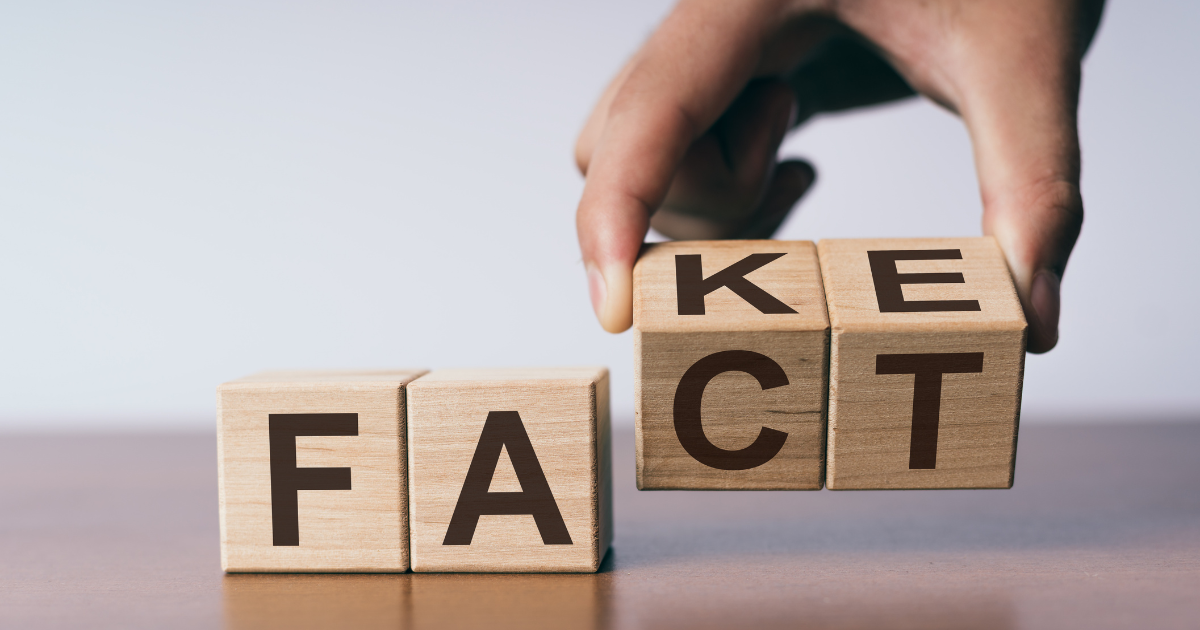
AI hallucinations are creating havoc in the writing world.
Generative AI offers lightning-fast research, idea generation, complete outlines, and near-final drafts that can shave hours—or days—off a project. Whether you’re writing an email or a book, AI promises quick results with little effort on the author’s part.
That efficiency, however, comes with risk: AI hallucinations.
AI is designed to please the prompter with an answer to every query, and verifiable facts don't always matter.
The result?
Confident-sounding fabrications, invented citations, or plausible-but-false “facts” derail credibility faster than a missed deadline.
Broad Nib Creek Studio helps authors, content strategists, and indie publishers navigate this new landscape. We treat AI as a sharp co-pilot, never the captain. The goal isn’t to fear the technology but to wield it with intention, precision, and a healthy dose of human skepticism.
Here’s how writers can fact-check effectively with AI while keeping their work grounded in truth.
Understanding the Beast: What AI Hallucinations Really Are
Sure, AI is intelligent, but it’s not “street-smart,” the way a human is.
Large language models predict patterns based on vast training data. In its early youth, AI trained on Reddit conversations. Today, LLMs devour enormous amounts of information, which may or may not be truthful. Back in the day, computer programmers warned us about GIGO, or Garbage In, Garbage Out. Today, those predictions sometimes create seamless but entirely fictional details—quotes that were never said, studies that don’t exist, or historical events with invented participants. As it turns out, it’s still impossible to make a silk purse out of a sow’s ear.
The result, put nicely, is slop.
Readers and editors spot this “AI slop” quickly, just as they notice soulless generated copy. For writers building a personal brand or publishing under their own name, one major hallucination can damage trust that takes years to rebuild.
Three Steps to Avoid AI Hallucinations
However, there’s good news. With the right workflow, AI becomes an extraordinary accelerator, not a liability.
Step 1: Prompt with Skepticism Built In
Start strong with specific prompts that require a concrete answer. Instead of asking, “Tell me about the history of the printing press,” try something more directive: “Provide a summary of the key milestones in the development of the printing press in Europe, citing only verifiable historical sources. Flag any information where certainty is low and suggest primary references for verification.” Next, layer in instructions like “Respond only with information you can ground in known facts” or “If inventing details, say so explicitly.”
Good prompts reduce hallucinations from the outset, but they don’t eliminate them. Always assume the output needs verification.
Step 2: The Verification Toolkit Every Writer Needs
Treat every AI-generated claim as a hypothesis, not gospel.
Here’s a practical checklist we use with clients:
- Cross-reference primary sources. If AI mentions research or a study, find the original paper or report. Don’t trust the AI summary—read the abstract or methodology yourself. Rely on tools like Google Scholar, JSTOR, or library databases.
- Verify citations like your life depends on it. Fabricated references are among the most common hallucinations. Copy-paste the title, author, and journal into a search engine. If the information doesn’t appear in multiple reputable databases, it’s likely invented. Even real-looking DOIs can be wrong.
- Triangulate results with multiple AI tools. Run the same query through different AI models. Data confidence rises when results agree. For major discrepancies, use human-in-the-loop research.
- Use the right search engine for the right results. Specialized search engines often cite sources inline, making verification faster. Combine these with traditional search for balance.
Check and recheck dates and context. Always confirm the most recent reliable data, especially for statistics, laws, or scientific findings.
Step 3: Build a Bulletproof Workflow
Many writers rely on AI for speed. Smart writers create systems that blend speed with safety. We suggest the following:
- AI for brainstorming and structure. Use it to outline chapters, suggest angles, or generate placeholder research summaries. Keep these raw and untrusted.
- Human-first drafting. Write core sections in your own voice first. Only then consult AI for supporting details or fact expansion.
- Layered fact-checking. After drafting, highlight every factual claim. Query AI for supporting info, then verify independently. Note sources in your working document immediately.
- Read-aloud and gut check. When something feels off—even if you can’t pinpoint why—dig deeper. Human intuition catches nuances machines miss.
- Peer or professional review. For high-stakes work (books, client content, journalism), have a second pair of eyes or fact-checker review claims. At our studio, this step has saved more than one project from embarrassment.
Real-World Lessons from the Studio
We recently supported an indie author writing a business history book.
The first AI-assisted draft included several compelling “quotes” from industry leaders. After verification, we discovered that two were fabricated, and one was so heavily paraphrased it was unrecognizable. By shifting our process—using AI only for initial leads and insisting on primary source confirmation—we delivered a manuscript the author could stand behind with pride.
In another case, a content client needed timely statistics on remote work trends. AI provided clean numbers, but we traced them to the original surveys. One dataset was two years old and contextually misleading. Updating with fresh sources elevated the entire piece.
These experiences reinforce our philosophy: AI handles volume; humans handle truth and heart.
Beyond Verification: Maintaining Your Voice
Fact-checking isn’t just about accuracy—it protects your authenticity. Readers connect with writers who demonstrate care and integrity. When you verify rigorously, you signal respect for your audience.
Let AI spark ideas, summarize known concepts, or rephrase awkward sentences. Reserve the final judgment, emotional weight, and storytelling nuance for yourself. That combination—machine efficiency plus human depth—produces work that stands out.
Final Thoughts: Embrace the Hybrid Future
Writers who master AI fact-checking will outpace those who either reject the tools entirely or surrender to them unthinkingly. The technology isn’t going away, but neither is the need for credible, resonant content.
Grab that cup of coffee, settle into your writing space, and experiment with these practices. Start small: fact-check one AI-generated paragraph today using the verification checklist. Build the habit. Your future readers—and your reputation—will thank you.
At Broad Nib Creek Studio, we’re here to help you navigate these tools while keeping your voice strong and your facts straight. Whether it’s research support, full drafting with verification layers, or polishing your manuscript, let’s create extraordinary content you can trust.
Because in the end, great writing isn’t about speed alone. It’s about truth, heart, and the power of the right word—verified, authentic, and entirely yours.