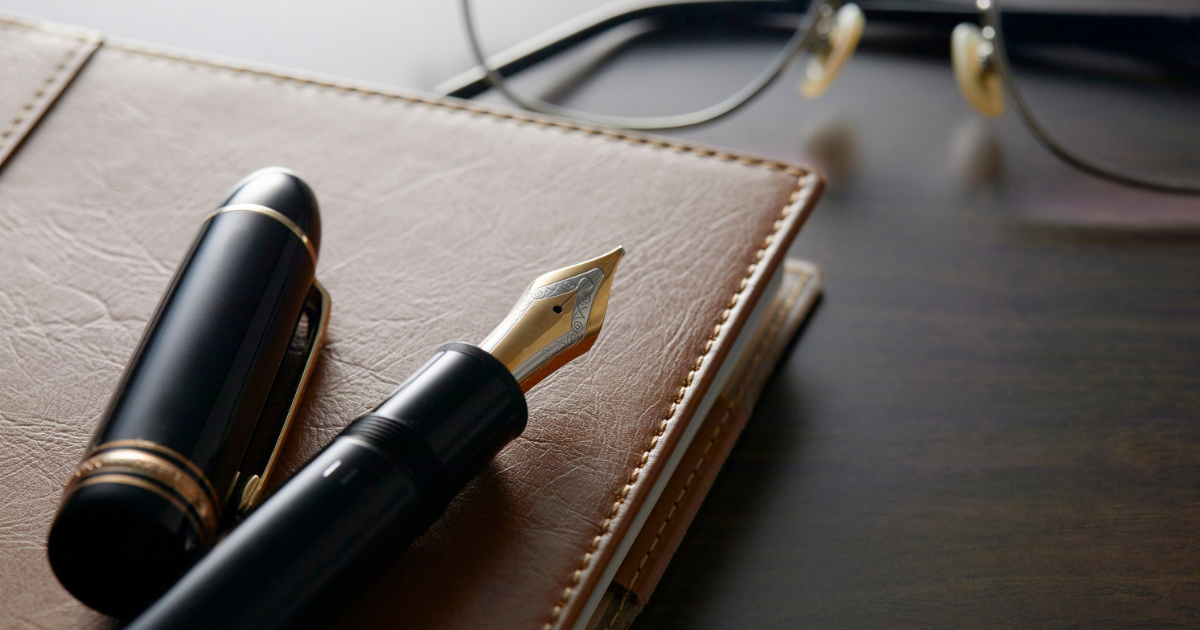
Some tools, like a fountain pen, quietly change everything.
Years ago, on a whim after too many hours staring at screens, I bought my first fountain pen—a modest but well-balanced model with a smooth nib. What started as a curiosity quickly became a revelation. Slowing down to write by hand with liquid ink flowing across paper didn’t just feel different. It sharpened my thinking in ways I hadn’t expected.
At Broad Nib Creek Studio, where we champion remarkable writing and intentional communication, this experience reinforced something we’ve long believed: the right tools don’t just capture ideas—they shape them. Where far too often, rapid typing and instant deletes take precedence, a fountain pen invites presence, precision, and deeper reflection.
The Physical Shift A Fountain Pen Brings
There’s a tactile pleasure to a good fountain pen that keyboards can’t match. The slight resistance of the nib on quality paper, the controlled flow of ink, the ritual of uncapping and inking—it demands mindfulness.
You can’t rush it the way you barrel through a laptop draft.
This deliberate pace creates space for thought. There’s room for doodling, sketching and delicious brainstorming. In fact, studies on handwriting versus typing show that the physical act of forming letters activates more areas of the brain involved in memory and comprehension. With a fountain pen, that effect feels amplified. Each stroke feels intentional. Sentences emerge more thoughtfully because crossing out or rewriting takes real effort. You pause, reconsider, and often land on clearer, more elegant phrasing.
I noticed it first in my morning pages. Instead of scattered bullet points typed in a rush, my handwritten entries explored ideas with greater nuance. Connections between concepts surfaced more naturally.
Problems that felt tangled on screen began resolving themselves on paper.
Clarity Through Friction
Digital writing offers endless convenience—autocorrect, easy rearrangement, instant research.
But that lack of friction can become a trap. Ideas flow too freely, sometimes without enough scrutiny. A fountain pen introduces healthy friction. You commit to the words more fully, which encourages better choices from the start.
One client project perfectly illustrated this. A business leader struggling with a keynote speech switched to fountain pen outlines for his main points. The resulting talk felt more authentic and structured. He told us the pen forced him to distill complex ideas into their essence before expanding them digitally. The final delivery resonated deeply because the thinking behind it had matured on paper first.
In our studio work—whether drafting client content, designing curricula, or supporting book projects—we often recommend this hybrid approach. Use the pen for ideation and deep thinking. Move to digital for polishing, collaboration, and production. Together, they produce stronger, more human work.
Finding Your Own Pen Experience
You don’t need an expensive heirloom to start.
- Set a budget — Start inexpensive (ideally under $25–50). Excellent beginner options exist at this price; avoid high-end pens until you know you like writing with fountain pens.
- Select a nib size — Fine (F) or Medium (M) are the safest starting points for most people. Extra Fine suits very small handwriting or cheap paper; broader nibs put down more ink. Note that Japanese nibs (e.g., Pilot, Platinum) run finer than Western ones (e.g., Lamy).
- Choose your material and quality — A smooth, reliable steel nib is ideal for beginners. Gold nibs are softer and more expensive but unnecessary at the start. Look for consistent ink flow without needing heavy pressure.
- Decide on your filling system — Cartridge systems are the simplest and cleanest for true beginners. Some cartridge system pens also accept a converter so you can later try bottled inks. Piston fillers hold more ink but require a bit more maintenance.
- Pick a size and weight — The pen should feel comfortable in your hand. Check diameter, length, weight, and balance. Some pens (like the Lamy Safari) have a triangular grip that guides finger placement. Larger pens are easier to write with; thin pens require more control. Popular, well-regarded starter brands include Pilot (Metropolitan, Kakuno), Lamy (Safari/AL-Star), Platinum (Preppy), and TWSBI. These tend to write well out of the box.
By all means, begin experimenting with different nib sizes—fine for precise notes, broader for expressive journaling.
Since buying my first fountain pen, I've graduated to the Holy Grail of pens: the Montblanc.
I was certain either a Meisterstück 149 or 146 would fit my hand best. Instead, I went home with the Meisterstück Calligraphy Curved Nib Special Edition. It’s a massive pen. And yes, it was expensive. But I had just completed six weeks of daily chemo and radiation, and to say I was weak was an understatement. However, I wanted to get back to writing. The store owner assured me that I would be able to control the thicker barrel more easily.
He was right.
My pen rests beside my notebook for strategic planning sessions. The simple act of filling it becomes a cue to slow down and engage fully with the work. The benefits extend beyond individual thinking.
In coaching and content strategy sessions, I’ve generated richer ideas when I step away from screens for initial brainstorming. Handwritten notes later scanned or transcribed carry a personal energy that digital-first work sometimes lacks.
Reclaiming Thoughtful Creation
Tools like AI help us move faster, but they don’t replace the need for deep, original thinking. A fountain pen reminds us that slowing down strategically often leads to better outcomes. It improves focus, reduces distractions, and fosters a more embodied connection to our words.
broadnibcreekstudio.com
Readers and clients can feel that difference. Content developed with care and reflection lands with greater impact.
If you’re feeling stuck in a creative rut or want sharper thinking, consider picking up a fountain pen. The investment is small. The return—clearer ideas, more pleasurable writing sessions, and improved mental clarity—can be profound.
I love tools that honor the craft of communication. Whether it’s a trusted pen, thoughtful AI integration, or expert support for your next project, the goal remains the same: create work that truly resonates.
What about you?
Have you experienced the power of analog tools in your digital workflow?
Grab a pen, settle in, and write about it.
Your best thoughts might just be waiting on the page.